
Understanding Stuttering and How to Help People Who Stutter
Stuttering, also known as stammering, is a speech disorder that affects the flow of speech. It is characterized by repetitions (such as “b-b-ball”), prolongations (holding out sounds like “ssssun”), or blocks (when the person tries to speak but no sound comes out). While everyone occasionally hesitates or repeats words, stuttering is more frequent and can cause frustration, embarrassment, or anxiety about speaking.
What Causes Stuttering?
The exact cause of stuttering isn’t fully understood, but research shows that it often results from a combination of genetic, neurological, and environmental factors.
- Genetics: Stuttering tends to run in families, suggesting a hereditary component.
- Brain differences: Studies show that people who stutter may process speech and language slightly differently in the brain.
- Developmental factors: Stuttering often begins between ages 2 and 5, when language is rapidly developing.
- Environmental factors: Stress, fast-paced environments, or interruptions during early speech can sometimes influence how severe stuttering becomes.
Stuttering is not caused by nervousness, low intelligence, or poor parenting – common myths that can be harmful and discouraging.
How Stuttering Affects Individuals
For some, stuttering may be mild and have little impact on daily life. For others, it can make speaking situations—like answering the phone, reading aloud, or giving a presentation—very stressful. The emotional impact can include fear of speaking, social withdrawal, or low self-esteem.
With the right support, however, people who stutter can become confident, effective communicators.
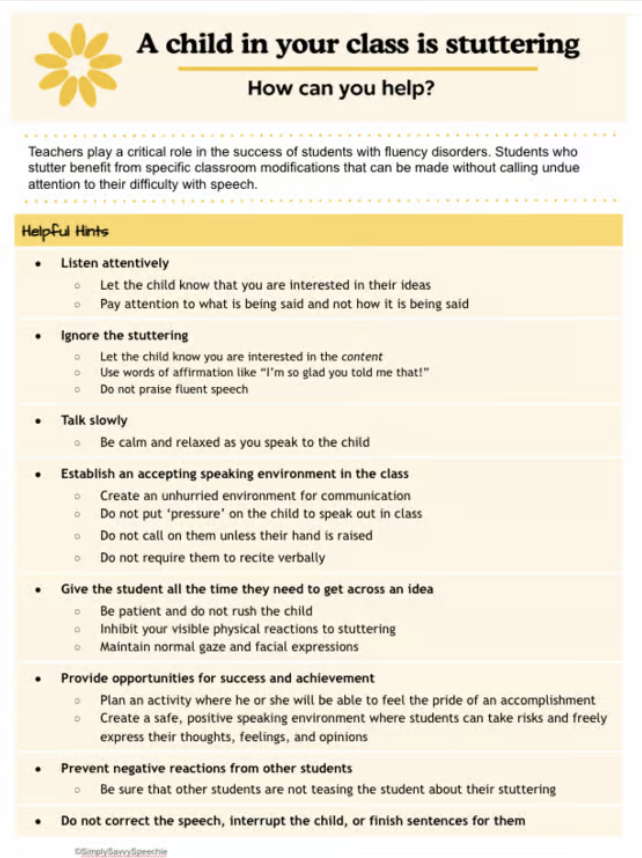
How to Help Someone Who Stutters
5. Use Positive Language
Avoid labels or teasing. Instead of saying “slow down,” try neutral encouragement like, “Take your time—I’m listening.”
6. Encourage Professional Help
Speech-language pathologists (SLPs) specialize in assessing and treating stuttering. Therapy can help with fluency techniques, confidence, and self-acceptance.
How Speech Therapy Helps
Speech therapy for stuttering is individualized. Some common strategies include:
- Fluency shaping: Learning smoother speech patterns through controlled breathing and phrasing.
- Stuttering modification: Reducing the tension and struggle associated with stuttering moments.
- Counseling and confidence-building: Addressing the emotional aspects of communication.
Therapy often focuses on communication, not perfection, helping the person speak comfortably and confidently.
Embracing Acceptance and Awareness
October is recognized as International Stuttering Awareness Month, reminding us that everyone deserves to be heard—fluently or not. Famous figures such as President Joe Biden, actor Emily Blunt, and singer Ed Sheeran have shown that stuttering does not define one’s potential.
Stuttering is just one aspect of a person’s voice. With patience, understanding, and support, we can make communication easier and more inclusive for everyone.
You can download the handout here

 AGE GROUP
 Resource Type