 OVER 1,000 THERAPY RESOURCES
 GET 25% OFF YOUR FIRST ORDER - CODE: TEACH25
 LIMITED-TIME DEALS ON BEST SELLERS
 200+ FREE THERAPY DOWNLOADS AVAILABLE
 SELL YOUR RESOURCES & EARN

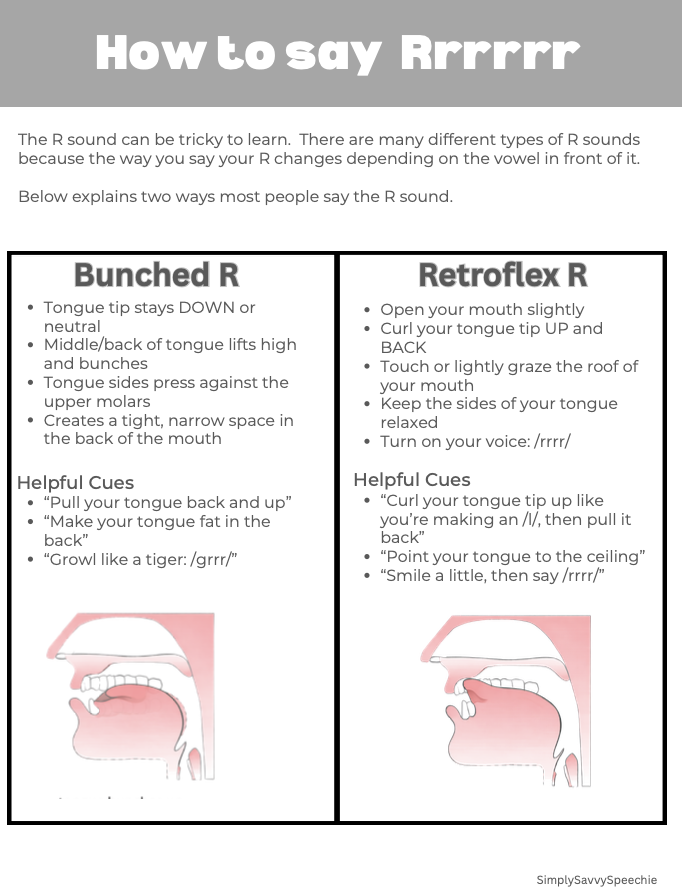
Many children have difficulty learning to say the /r/ sound. It’s one of the most complex sounds in English because the tongue has to move in a special way, and there’s more than one correct way to make it! Understanding the two main tongue positions can help parents support their child’s speech practice at home.
1. The Bunched /r/
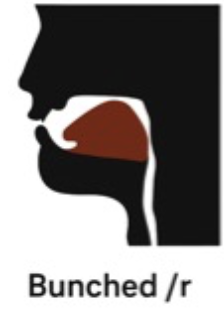
In the bunched /r/, the tongue is pulled back and lifted in the middle, forming a “hump” or “bunch.” The sides of the tongue gently touch the upper back molars. The tip of the tongue stays low, usually near the bottom teeth.
How to describe it to your child:
- “Make your tongue into a hill in the middle.”
- “Keep the tip of your tongue down.”
- “Your tongue sides touch the top teeth in the back.”
This version is often easier for children who prefer to think about the middle part of their tongue rather than the tip. You can use a mirror or even a tongue depressor to help them see or feel where the tongue should lift.
2. The Retroflex /r/

In the retroflex /r/, the tongue tip curls slightly up and back toward the roof of the mouth—but it doesn’t actually touch it. The sides of the tongue are also lifted a bit, and the tongue is pulled back into the mouth.
How to describe it to your child:
- “Curl your tongue tip back a little, like you’re making a tiny slide.”
- “Keep your tongue inside your mouth—don’t let it touch the roof.”
- “Feel your tongue pull back and up.”
This version often feels more natural for some children, especially if they can feel the “curl” of the tongue tip more easily than the bunching motion.
3. Both Ways Work!
Speech-language pathologists (SLPs) know that both the bunched and retroflex /r/ sounds are correct. Everyone’s mouth is shaped a little differently, so one version might be easier or sound clearer for your child. The goal is to find the position that produces the right sound consistently.
4. Tips for Practice at Home
- Listen and feel: Have your child notice the difference between “wrong” /r/ (like “wabbit”) and the correct /r/ (like “rabbit”).
- Try both ways: Let them experiment with both the bunched and retroflex positions.
- Use mirrors: Visual feedback helps children see mouth placement.
- Start with sounds: Practice /r/ in isolation before adding it to words (e.g., “r,” “ra,” “ree,” “row”).
- Be patient and positive: /r/ is a tricky sound and can take time and gentle repetition to master.
 AGE GROUP
 Resource Type